
Surge hiring. Fully owned. Then handed back.
A fixed hire count or a defined timeline — whichever matters most to you. We own delivery completely for that scope. Everything outside it stays with your team.
Book a call
A defined hiring programme. Not an open-ended engagement.
RPO Project is bounded by scope: a fixed hire count or a set timeline, whichever matters most to you. We own delivery for that scope completely. Everything outside it stays with your team.

People
The recruiters and delivery leadership needed to hit your project scope, deployed for the length of the programme.
Process
An end-to-end hiring workflow scoped to your project, from briefing through to offer, then wound down once it's delivered.
Technology
We work inside your existing ATS and systems for the length of the project. Nothing to integrate long-term.
Outcomes
Named SLAs for the length of the project: time to fill, project completion, and quality of hire.

Three SLAs. Scoped to the project.
RPO Project runs on outcome SLAs agreed at scoping, tracked for the length of the programme, not indefinitely.
Time to Fill (TTF)
Days from confirmed brief to accepted offer, agreed per role type at scoping.
Project Completion
Percentage of the defined scope, hires or timeline, delivered against plan.
Quality of Hire
Assessed against the brief and role requirements, not just speed to fill.
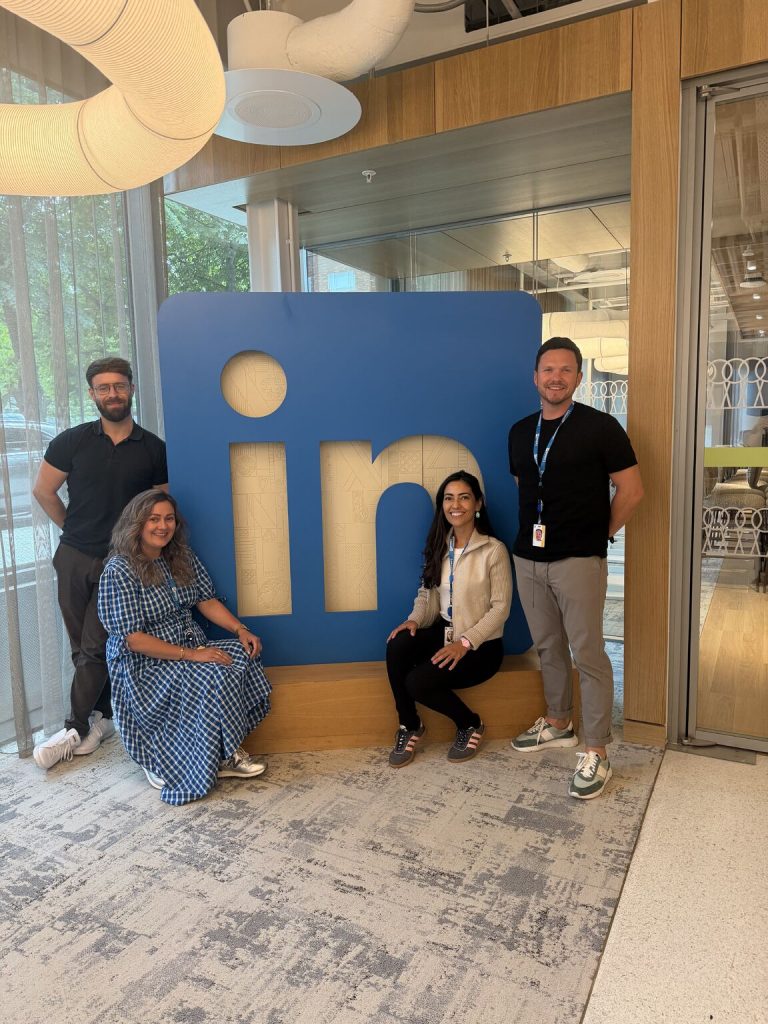
 Partnership announcement
Now delivering Embedded RPO for LinkedIn

Who is RPO Project for?
RPO Project tends to be the right conversation when a few things are true at once.
From scoping to hand-back.
1 Discovery +
We scope the project, a fixed hire count or a defined timeline, and agree what "done" looks like.
2 Mobilisation +
We deploy the team and work inside your existing systems and brand. SLAs start from go-live.
3 Delivery +
We run the programme end-to-end. Weekly reporting keeps you across progress against the defined scope.
4 Hand-back +
Once the scope is delivered, we hand back cleanly. No ongoing commitment beyond the project.
Where RPO Project fits.
RPO Project is one of three RPO models, each built for a different level of ownership. Here's how they compare.
RPO Lite
RPO Project
RPO Full
See the model in action.
Read how we've helped businesses deliver defined hiring programmes on time and within scope.
See case studies
Common questions.
1 How long does it take to get the project scoped and running? +
Typically two to three weeks from contract sign-off to go-live, depending on complexity and the defined scope.
2 What happens to our existing ATS and tools? +
We work inside your existing systems for the length of the project. Nothing to integrate long-term.
3 Will candidates know they're speaking to an outsourced function? +
Only if you want them to. We operate under your employer brand by default.
4 What does the commercial model look like? +
Priced against the defined scope, hire count or timeline, plus role mix and geography. Agreed upfront, not renegotiated mid-project.
5 What if the project scope changes mid-way? +
We plan for this. A flex mechanism covers scope changes without a full commercial renegotiation.
6 What happens once the project ends? +
We hand back cleanly. If there's an ongoing need afterwards, moving to RPO Lite or Full is a straightforward next step, not a re-tender.