
Contents

Insights
The Mobility Deficit: How talent hoarding erodes retention, innovation, and growth
Overview
Internal mobility – where employees can build and advance their careers within a single business – has built-in value for both businesses and individuals. But when managers hoard talent because it suits their own personal needs, the business is likely to have problems with retention, innovation and growth.
Here, we talk about what talent hoarding is, and why it happens. It's not a blame game – it's a way of helping you recognise where it may be happening in your business, and what you can do to find, encourage and develop talent so that internal mobility becomes an integral and valuable part of your workforce management strategy.

Introduction
Businesses of all sizes are losing out on the talent that's already in their business.
Why?
Because managers are – consciously or not – hoarding the talent in their teams.
This talent hoarding is usually the result of the KPIs set for managers, which are at loggerheads with making the most of talented people within the business. Managers protect their own team performance and results by blocking, delaying or even sabotaging opportunities for their best people.
Here, we'll help you to see why this is counterproductive, and what you can do to promote talent mobility in your organisation.
#1
What is talent hoarding?
Internal mobility – an embedded part of a business's culture that develops people's talent and keeps it in the organisation – is a business-critical lever. The opposite of internal mobility is talent hoarding. This is where someone's talent either lies undiscovered and undeveloped, or is deliberately (often unconsciously) held back within the existing team because losing it would disadvantage that team.

#1
When organisations allow talent hoarding to go unchecked, they pay for it three times over:
Retention
People who are frustrated with their progress in your business, particularly when they can see opportunities they'd like to pursue, will just leave and go somewhere else. If your business has high internal mobility, you'll also see better retention.
Innovation
When talent is fulfilled, supported and nurtured, employees are more likely to contribute to innovation and new ideas. Failure to give people the space to use their talents means you'll miss out on cross-functional knowledge and potentially game-changing inspiration.
Growth
To grow consistently, you need the best people in the right roles. When managers hoard talent, they may feel like they're shoring up their own department, but in fact, they're disrupting business growth, and you're losing your next potential senior executive.
These issues create a real struggle for organisation design. The very things that allow progress to be measured – KPIs and individual and team performance reviews – are the things that are keeping talent squashed and unable to contribute. But, where organisations have switched targets to those that support internal talent mobility, things change.
#1
According to a report from Deloitte Insights:
Organizations that promoted internally are 32 percent more likely to be satisfied with the quality of their new hires. That's because it typically takes two years for the performance reviews of an external hire to reach the same level as those of an internal hire. Compared with internal hires in similar positions, external hires are 61 percent more likely to be laid off or fired in their first year of service and 21 percent more likely to leave.
— Deloitte InsightsYet the reality is that a culture of talent hoarding can lead to a culture of talent loss: When you block people from moving up within an organization, they often simply go elsewhere.
— Deloitte InsightsWhy is this happening in organisations? What is it about our approach and culture that encourages – not openly, but through processes and systems – managers to ignore talent that could be put to better use for the greater good of the business?
#2
What talent hoarding looks like
According to the report Talent Hoarding in Organizations, by Ingrid Haegele:
The problem is that organisations often confuse retention with restriction. Retention means creating reasons for people to stay; hoarding means limiting their movement because the manager fears the cost of losing them. Research describes this as managers having incentives to hold onto high performers because their own performance is tied to team results.
— Ingrid Haegele, Talent Hoarding in OrganizationsThere are several common ways that businesses hoard talent. Make a note of them, and think about whether you've experienced, seen or done any of these. And if you have, consider what the consequences may have been, both individually and organisationally.
#2
Common ways businesses hoard talent
Managers want to retain good people in their teams, and so they take a narrow view. Instead of championing people in their teams for promotions elsewhere, they either actively discourage them or fail to support an application. Anecdotal evidence suggests that some people believe their managers may even hijack application processes to prevent someone from pursuing an internal promotion. This leads to the next common problem.
When managers' performance – and potentially their bonus – is managed by formulaic performance targets, they are incentivised to work in a silo with their team. If a key person leaves the team, even to go elsewhere in the business, the manager's metrics may suffer. So it is in their interests to block internal moves.
It's understandable. Managers have worked hard to build a strong team that's delivering good performance. Within that team are people they trust to do the job well, and they're loathe to lose them. When reliability is critical, no manager wants to lose someone they depend on.
As Ingrid Haegele says, managers often think they are supporting retention when in fact, they are creating restriction. This is both a structural and a cultural problem.
#2
Talent Hoarding in Organizations, reports on the first significant empirical survey in this area – conducted with 30,000 employees and managers across a single organisation. The results are interesting, particularly in terms of the way managers view their own attitude to learning and development, while not recognising the commercial consequences of following through.
The survey responses reveal a notable gap between perceived impact and perceived reward for talent development. While a large majority of managers (87%) report that talent development is an area where they can create high impact for the firm, only 40% indicate that a track record in developing employees is important for their own compensation and promotion prospects.
— Talent Hoarding in Organizations, Ingrid Haegele#2
If one of your top performers wanted to move to another team, what would your instinct be?
Thank you for voting
#3
The consequences of poor internal talent mobility
Let's remind ourselves of the three commercial deficits created by talent hoarding:
- Retention deficit
- Innovation deficit
- Growth deficit
What does this mean on the ground? There are two sets of risks here – the risk to the organisation, and the risk to the employee.
#3
Risks to the organisation include:
The wrong people in the wrong jobs
The best person for any given role may be stuck in the wrong job somewhere else in the business. Instead of working on high-value projects and challenges, they feel unfulfilled and lacking opportunity. We probably all know how it feels to know we are in the wrong role. It reduces productivity, prevents us from looking at new opportunities in the business and encourages us to consider leaving the business altogether. From the organisation's point of view, talent is lost to the business, despite turning up for work every day.
The leadership pipeline suffers
It's far more effective to cultivate leaders within the business than it is to hire from outside. You retain the culture, knowledge base and relationship building, investing in the best talent in your business so you can secure growth for the future. A good leadership pipeline ensures that talent is identified and developed. It creates things like stretch assignments and personal projects to help build confidence and experience, and looks at areas where new roles can be created to retain talent for the long term. Without any focus on building talent for the next generation of leaders, businesses risk losing their best talent to the competition.
Knowledge silos
The wider the knowledge is spread throughout the business, the better. Talent hoarding means that organisations end up with knowledge 'in boxes', and those people then become so essential to their team that managers are scared to move them on elsewhere. This reduces cross-functional knowledge, narrows the business vision and suppresses growth.
#4
What great mobility looks like – and who's doing it well
This is all very well in theory, but who is promoting talent mobility in practice, and what can we learn from their behaviours?
An article from the Academy to Innovate HR says:
Successful organizations don't necessarily invest more in talent; rather, they design their talent systems differently. In fact, large‑scale studies show that high‑performing organizations are moving toward skills‑powered, human‑centric models of work and cocreation.
— Academy to Innovate HRLet's look at three examples of businesses actively driving talent mobility. These are all big organisations, and the way they do things can be replicated in businesses of all sizes.
#4
Unilever
Unilever has brought in a range of ways to support people to build their skill base and stay in the business. This includes an AI-powered internal talent marketplace called InnerMobility, and a programme called FLEX Experiences.
InnerMobility connects employees with a range of learning and development opportunities, including mentoring and job swaps. The scheme allows each employee to build a skills profile, and they are able to respond to calls from managers for short-term skills needs. Talent building is treated as a core part of the culture.
… we wanted to start from a place of purpose. By that we mean: what makes that person unique? What is their unique way of approaching work? If we ask them to think about what skills they want to develop in line with their purpose, that's far more motivational for them to upskill. They benefit and Unilever benefits, because we're going to get them at their best.
— Patrick Hull, Unilever's VP of Global Learning & Future of Work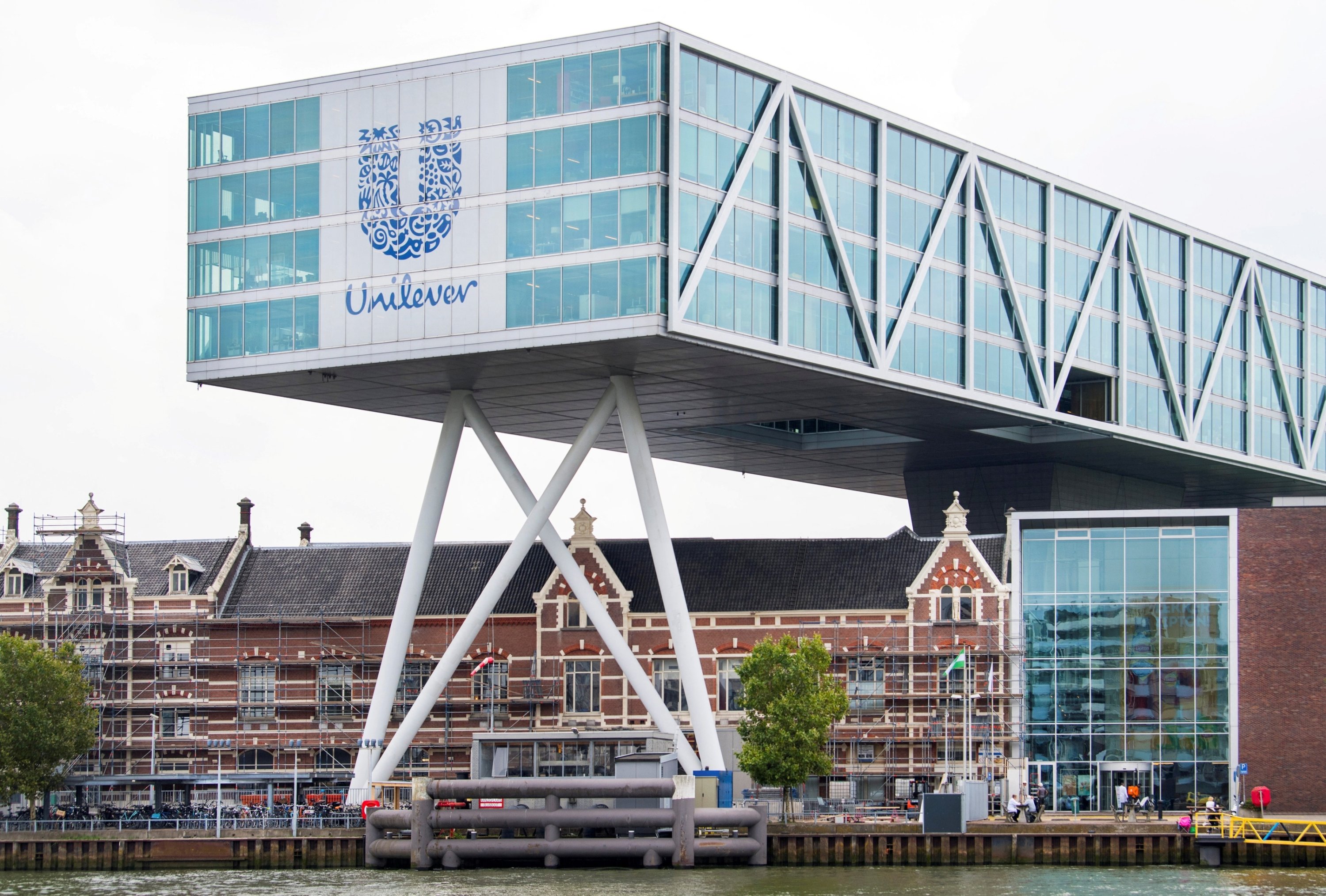
#4
Vanguard
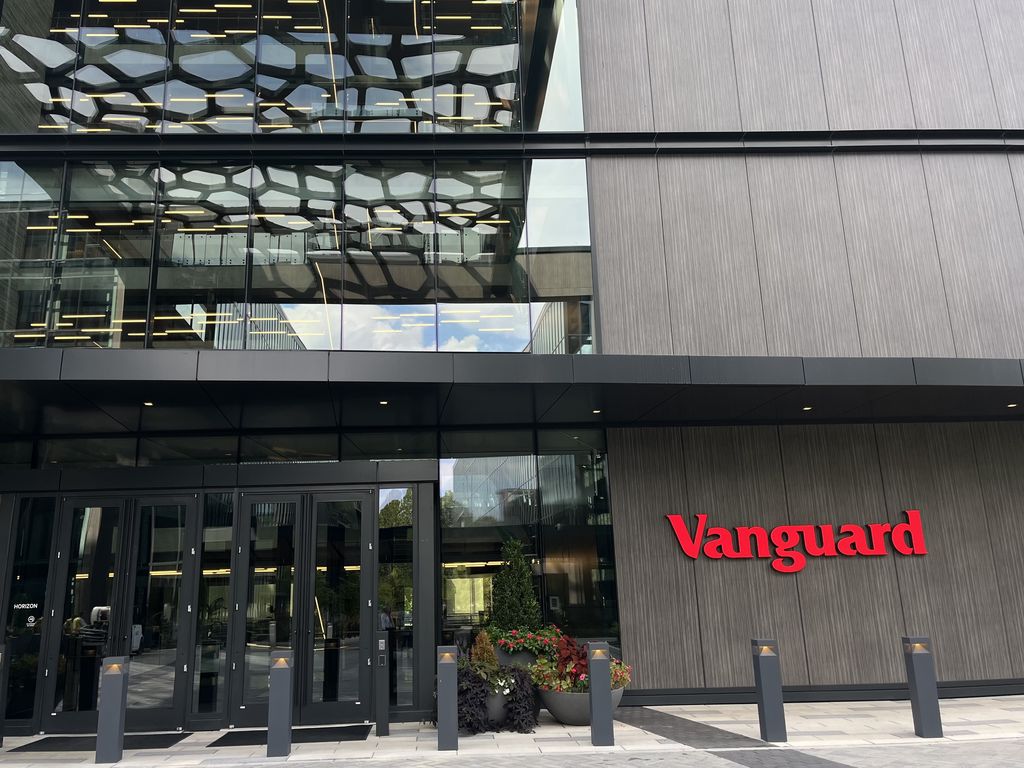
Vanguard is a great example of the leadership pipeline we talked about above. It has invested in middle management roles to make sure that the people with the right skills and confidence are already in the business.
Like a traditional graduate recruitment scheme, talent rotation is built in. That means team members get a chance to work across the business, understanding how the whole enterprise works.
According to a report on Vanguard's work:
A recent officer-level promotion cohort illustrates this clearly: 44% have worked across multiple divisions, and 38% have started their careers through Vanguard's college recruiting programs.
Here's another example: a future C-suite successor moved from finance to product to strategy, then to client-facing roles, with each rotation deliberately building economic, strategic, product, and customer capability.
#4
Kingfisher plc
Kingfisher has worked with a third-party provider to develop structured talent pathways which take judgement away from individual managers and makes talent identification a core part of the central L&D system.
The model focuses on identifying capability, assessing potential, creating development pathways and strengthening succession pipelines.
As a Deloitte's report, Are you overlooking your greatest source of talent? Supporting a culture of internal mobility says:
Internal mobility—how that happens—is not just a way to retain talent. It also helps to create a powerful magnet for people outside your organization who seek professional growth. The result? The talent market can see your organization as one that champions ambition and performance in everything it does.
— Deloitte Insights
#5
What's the biggest barrier to internal mobility in your organisation?
Thank you for voting
#5
How can you improve internal mobility in your organisation?
This paper should present you with an opportunity to consider whether your organisation truly supports internal talent mobility, or whether it still relies on narrow measurements that encourage managers to hoard talent in their teams.
So, here's a question. If your most talented team member told you they had an opportunity to progress in another part of your organisation, would you help them, or impede them?
If you'd support them, that's great. And if you're 100% certain that other managers in your business would do the same, then you're clearly heading in the right direction.
But if that question has given you pause for thought, here are some of the things you can do – starting today – to make a change.
#5
Things you can do to make a change
The responsibility for positive internal mobility shouldn't lie with managers. They already face a lot of pressure to deliver, and the vast majority of managers work incredibly hard and give their best. The reason that managers hoard talent is because it helps them meet their current targets. By looking at different outcomes and supporting managers to see how moving talent around the business can be beneficial in the long term, mobility becomes part of the culture.
What do we mean here? We mean that culture and direction come from the top. When senior leaders are enthusiastic, positive and proactive about developing and retaining talent across the business, it runs across the whole business. The C-suite needs to see internal mobility as a valuable tool in building competitive advantage and growth, and drive the policies that make it happen.
Where managers can have a positive impact is in their conversations with the people in their team. Whether these are casual, catch-up conversations, or more formal performance reviews, these are the places where managers and individuals should be able to have a frank, open discussion about career development.
Many managers receive no training to help with this – and that's not fair. If you're expecting your managers to identify talent, suggest learning and development opportunities and support individuals to use their talents so that both they and the business benefits, you need to train them to have those conversations and know what to do next.
One of the biggest downsides of losing people from your business is the vital knowledge they take with them. Losing this can leave a big gap in your operations – and it's too late to do anything about it.
Of course, even if you have a great internal mobility programme, people may still leave your organisation. So now is the time to build knowledge retention into your business. The best way to do this is to build up resources that can be accessed by anyone in the business.
The most obvious example of this is a CRM – Customer Relationship Management system. This is where all useful information about a customer account are logged. Not just what they've bought and when, but detailed relationship knowledge and conversation details.
Now, AI allows you to build knowledge centres for all operations, policies, interactions and corporate history. A good system allows people to update and access easily, allowing the knowledge sharing you need to maintain momentum at any time.
A good internal mobility programme needs to be measured. You need to know what's working and what's not. And, most importantly, you should be able to relate the way you are using talent to metrics such as sales, profitability, efficiency and innovation. This is particularly the case if you are newly adopting a programme, so that you can prove it in practice, but even those businesses with long-standing mobility schemes will measure their success as a separate item, rather than making it part of more general measurement across the business.
#6
It's our view that talent mobility is both holding businesses back and failing the people who are working for them.
The result is that talent that could be rewarding you with growth and innovation is either invisible to leaders or heading off to work for the competition. And neither of those is what you want.
It's time to give talent the time, space and support it needs.
#6
Resources
- Talent Hoarding in Organizations; Ingrid Haegele, Ludwig-Maximilians University, 2025
- Resourcing and talent planning report 2024; CIPD, September 2024
- Are you overlooking your greatest source of talent? Supporting a culture of internal mobility; Deloitte Insights, 2018
- The Future of Work is Flexible; Wired Consulting for Unilever
- 7 Talent Strategy Examples + How to Implement a Winning Strategy for HR; AIHR, 2026
- Strengthening internal talent mobility with Talogy's leadership assessment solution; Talogy, 2025
Thank you
Thanks for reading
We hope this has given you a clearer view of how talent hoarding shows up in your business — and what to do about it.